Wine Country micro weddings are having a moment for a reason: you get the vineyard views, the elevated food and wine, and the relaxed weekend-away feel—without needing a 150-person guest list to make the numbers work.
But in Napa and Sonoma, small does not automatically mean inexpensive. The trick is choosing venues that actually scale down: spaces with realistic minimums, flexible timelines, and layouts that still feel full with 30–50 people.
Below is a practical guide to finding intimate Wine Country venues under 50 guests, what they tend to cost in 2026, and how to avoid the most common micro-wedding budget surprises.
What counts as an 'intimate' Wine Country wedding (and why venues price it differently)
In the Bay Area, most venues consider anything under 50 guests a micro or intimate wedding. The pricing, however, is usually driven less by headcount and more by: (1) whether the venue must close to the public, (2) whether catering is in-house, and (3) how much staffing is required for the experience you want.
That’s why you’ll see minimum spends (food & beverage minimums) and site fees even for small weddings—those numbers protect the venue’s revenue for the day. Your goal is to find venues whose minimums are built for small groups, not venues that allow small weddings but still expect large-wedding revenue.
Three venue formats that work especially well under 50 guests
- Restaurant-with-a-view (buyout or semi-private): easiest logistics, fewer rentals, strong food.
- Inn/hotel courtyard weddings: built-in rain plan and guest lodging; fees vary by season/day.
- Small garden/terrace or tasting-room events: best for ceremonies + champagne reception, then dinner elsewhere.
Realistic 2026 price ranges for Napa & Sonoma weddings under 50 guests
Even with 30–50 guests, Wine Country is still a premium market. For context, one Napa/Sonoma planner notes that 2026/2027 couples should expect a starting point around $1,200 per person for a 100‑person wedding (all-in vendor budget). Your micro wedding can land well below that—but only if you’re intentional about what you’re buying.
For intimate weddings under 50 guests, a common pattern looks like this: a site fee (or room fee) plus a food & beverage minimum. The minimum is often easier to hit than you think when you factor in a plated dinner, wine, and service charges.
A very workable planning range many couples end up in is: venue + catering/bar combined $12,000–$35,000 depending on day-of-week, season, and whether it’s a restaurant-style event or a private estate-style setup.
Micro-wedding budget math to do before you tour
- Ask for the site fee and the F&B minimum separately.
- Confirm what counts toward the minimum (food, alcohol, service charge, tax—often the last two do not).
- Check the time window (5 hours vs 6 hours changes staffing and your timeline).
- Ask about built-in items (tables, chairs, linens, flatware) so you don’t duplicate rentals.
Venue examples that scale down beautifully (with concrete minimums to look for)
Below are a few Wine Country venue styles with real-world fee structures you can use as benchmarks when you’re comparing options. Pricing changes year to year, but these examples give you a reality check on what a good micro-wedding minimum looks like in Napa/Sonoma.
Restaurant venues: Brix (Yountville) as a reference point
For a daytime wedding at Brix, the venue lists a food & beverage minimum of $6,000 up to 70 guests (then $80/person after) with site fees starting at $2,000 Monday–Thursday, $4,000 Friday, and $6,000 Saturday.
For evening weddings, the listed minimum increases to $10,000 up to 70 guests (then $120/person after), with site fees starting at $4,000 Monday–Thursday, $6,000 Friday, and $10,000 Saturday.
Brix also publishes smaller spaces (up to 60 guests) with lower site fees and minimums—useful if you want the Wine Country ambiance without needing a full-vineyard buyout.
All-in-one event venues: Tre Posti (St. Helena) as a benchmark
Tre Posti’s published packet is a helpful reference because it shows how season and day-of-week affect both the site fee and the minimum. For May–October evening weddings, it lists site fees from $4,500++ (Mon–Thu) up to $9,500++ (Saturday), with food & beverage minimums from $7,500++ up to $17,500++.
In winter (December–February), the same packet shows significantly lower numbers for events capped at 125 guests or fewer—down to a $1,500++ site fee and $3,500++ food & beverage minimum for Sunday–Thursday.
The packet also notes a 22% service charge and that tax is currently 8.25% (subject to change). Those add-ons matter more on micro weddings because they can feel like a larger percentage of your total spend.
Inns and boutique hotels: why they’re underrated for small guest counts
Courtyards, lawns, and restaurant terraces at inns can be ideal under 50 guests because the space feels intentional and your rain plan is usually straightforward.
When you ask for pricing, clarify whether you’re being quoted for a full property buyout or a private area. The difference is huge—and for micro weddings, you often don’t need a full buyout to get a beautiful experience.
How to choose the right venue for your guest list (30 vs 50 makes a difference)
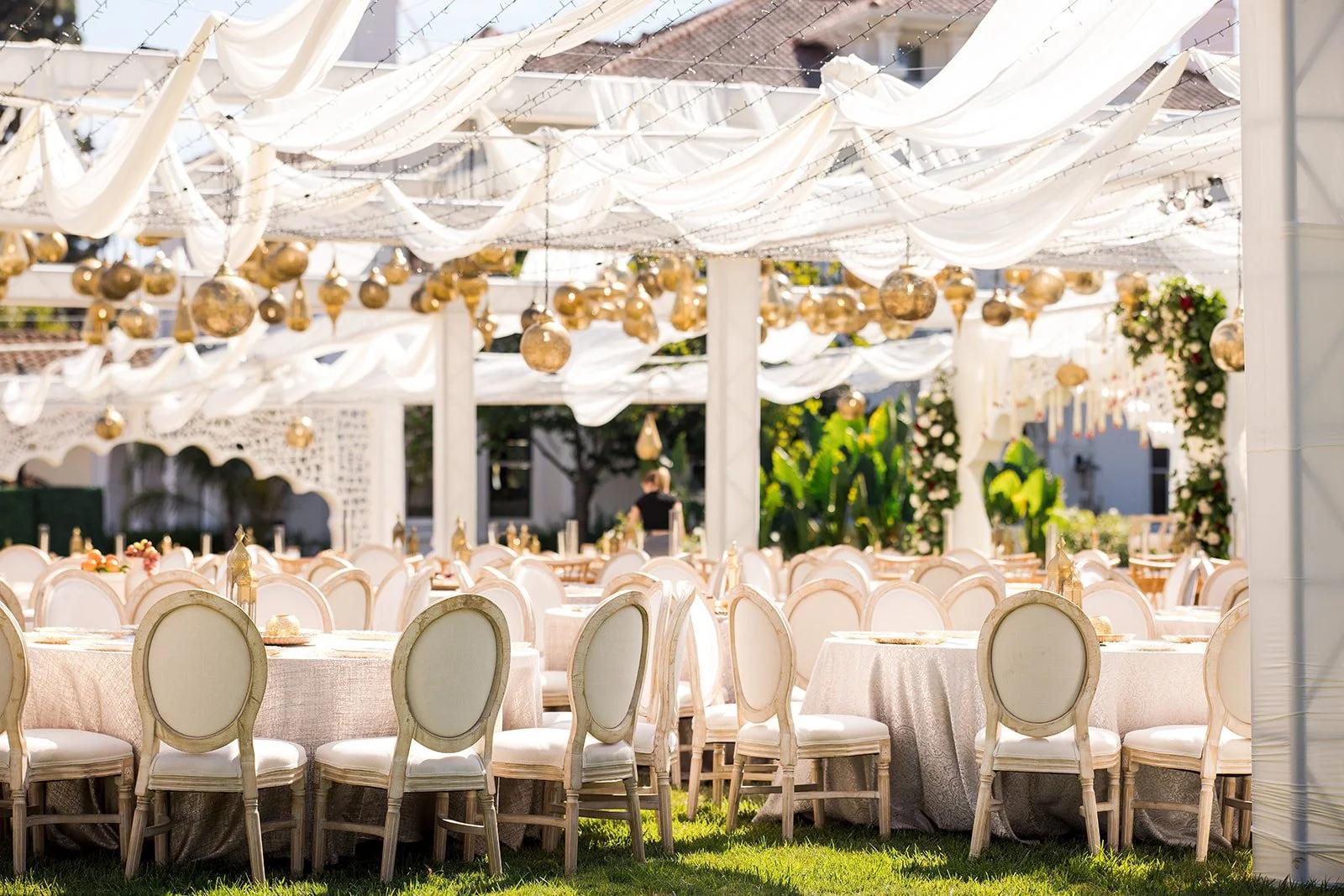
One of the most common micro-wedding mistakes is touring venues that are physically gorgeous, but functionally too big. A 40-person wedding in a 200-person lawn can look sparse unless you invest heavily in rentals and design.
When you’re vetting venues, pay attention to the parts of the property you’ll actually use: ceremony site, dinner area, and dancing (or lack of dancing).
Quick layout checks that save you money
- Does the dinner space comfortably fit one long table (or two) so the room feels full?
- Is there a covered backup plan that doesn’t force a room flip?
- Can you host everything in one area (ceremony + dinner) to reduce rentals and staffing?
- Are there sound restrictions that make a band or DJ unrealistic after 9–10pm?
Tactics to keep an intimate Wine Country wedding from ballooning in cost
Micro weddings can be deceptively expensive if you try to replicate a big-wedding production on a small guest count. The good news: with the right choices, intimate weddings are the easiest format to make feel personal and elevated without spending on things guests won’t notice.
Here are levers that work well in Napa and Sonoma in 2026:
Five high-impact ways to stay in budget
- Pick a weekday or Sunday: site fees and minimums often drop dramatically compared to Saturdays.
- Choose a restaurant venue when possible: built-in tables/chairs/flatware can eliminate a large rental line item.
- Do a 'champagne + ceremony' followed by a private dinner: perfect for 15–30 guests if you don’t need dancing.
- Put your money into food and wine, not sheer quantity: fewer guests means you can upgrade the menu and still keep totals reasonable.
- Keep florals intentional: one statement installation + bud vases can photograph beautifully without full-room coverage.
Questions to ask venues (so you don't get surprised after you sign)
Before you book, ask these questions in writing. They’re the ones that most often change the final cost for small weddings:
Venue contract checklist for under-50 weddings
- What exactly counts toward the food & beverage minimum?
- Are service charges and tax applied on top (and at what rates)?
- What is the earliest vendor arrival time, and are there overtime fees?
- Is a planner or day-of coordinator required by the venue?
- What rentals are included vs required (tables, chairs, linens, heaters, umbrellas)?
- What is the noise ordinance / music cutoff, and what does that mean for your timeline?
A simple venue short-listing plan (you can do in one weekend)
If you’re just starting your search, here’s a fast way to narrow down options without sending 40 inquiries:
48-hour micro-wedding venue plan
- Decide your format: ceremony + dinner only, or ceremony + dinner + dancing.
- Set your non-negotiables (vineyard view, lodging on-site, pet friendly, within 20 minutes of downtown Napa, etc.).
- Choose 6 venues: 2 restaurant venues, 2 inns/hotels, 2 event-only venues.
- Request the same four numbers from each: site fee, minimum, included rentals, and end time.
- Tour only the top 3 that truly fit the numbers—and book the one that matches your priorities.
Final thought: small guest counts deserve a venue that feels intentional
An intimate Wine Country wedding isn’t a compromise—it’s a format. When you pick a space that’s designed to feel full at 30–50 guests, the day flows better, photographs better, and usually costs less because you’re not fighting the venue’s scale.
If you want help building a short list based on your guest count, season, and vibe, start with venues that publish clear minimums and inclusions. Transparency is a good sign in Wine Country.